



GIẢI ĐỀ THI WRITING 2025
TRUNG TÂM NGOẠI NGỮ QUỐC TẾ ĐẠI DƯƠNG
GIẢI ĐỀ THI WRITING 2025
Xin chào các bạn!
Hôm nay chuyên viên giáo dục của công ty du học Đại Dương xin gửi đến các bạn một bài giới thiệu chi tiết về cách phân tích và viết bài hiệu quả trong phần thi viết chính thức của IELTS về hai dạng đề:
DẠNG TASK 1: PROCESS
DẠNG TASK 2: AGREE/ DISAGREE ESSAY
IELTS WRITING TASK 1
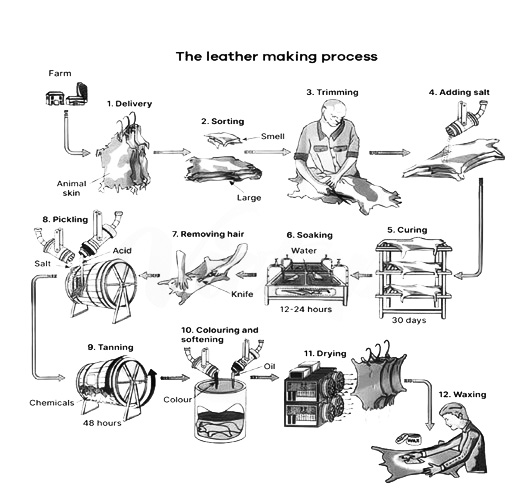
The diagram below shows the leather making process.
Summarize the information by selecting and reporting the main features, and make comparisons where relevant.
Phân tích đề
• Dạng biểu đồ: Process
• Topic: Quá trình làm da thuộc
• Tense: Các thì hiện tại
• Nhóm dữ liệu: chia làm 2 nhóm:
o Nhóm 1: Bước 1 tới 7 (không có chất hóa học)
o Nhóm 2: Bước 8 tới 12 (có chất hóa học)
o => có 2 đoạn thân bài
Lập dàn ý
Introduction: Paraphrase đề bài.
Overview:
• The process consists of twelve steps, beginning with preparation and preservation, followed by chemical treatments that refine the material into finished leather.
Body paragraph 1
(Bước 1 tới 7- không sử dụng chất hóa học – giai đoạn chuẩn bị)
Body paragraph 2
(Bước 8 tới 12 – sử dụng chất hóa học – Xử lý & hoàn thiện)
– Bước 1: Animal skins are delivered from farms to a facility– Bước 2: The skins are sorted by size (small and large)
– Bước 3: Workers trim away excess material
– Bước 4: The hides are coated in salt to prevent decomposition
– Bước 5: They are stacked on racks and left to cure for about a month
– Bước 6: The hides are soaked in water (12-24 hrs) to rehydrate
– Bước 7: Remaining hair is scraped off using a knife, leaving a smooth surface – Bước 8: The skins are pickled (immersed in acid and salt to soften)
– Bước 9: Tanning stage: chemicals are used for 48 hrs to strengthen the leather
– Bước 10: The material is dyed, softened with oil, and prepared for the final stages
– Bước 11: Industrial machines thoroughly dry the leather
– Bước 12: A wax coating is applied to the leather
SAMPLE
The diagram illustrates the step-by-step process of leather production, from the initial preparation of raw animal hides to the final waxing stage.
Overall, the process consists of twelve distinct steps, beginning with the collection and treatment of the raw material, followed by chemical processing to refine the leather into a finished product.
In the first stage, animal skins are delivered from farms and subsequently sorted by size. Once categorized, the skins undergo manual trimming to remove excess material before being salted, a crucial step in preventing decomposition. The hides are then stacked on racks for curing, a process that takes approximately 30 days to fully preserve the material. Following this, they are soaked in water for 12 to 24 hours, which rehydrates the leather and prepares it for hair removal, a process typically carried out using a knife.
The subsequent stages involve chemical treatments and mechanical processing to transform the raw hide into usable leather. Initially, the skins undergo pickling, in which they are immersed in a solution containing acid and salt to soften the material. After that, they enter the tanning stage, where they are placed inside a large rotating drum filled with chemicals and left to soak for 48 hours. This process strengthens the leather, making it resistant to decay and wear. Once tanned, the material is coloured and softened using a combination of oils and dyes, after which it is mechanically dried. Finally, the processed leather undergoes a waxing procedure, ensuring a smooth and polished surface before the product is ready for use.
Từ vựng
Từ vựng
Nghĩa
Animal hides (noun phrase) da động vật
E.g. Ancient tribes used animal hides for clothing and shelter.
(Các bộ lạc cổ đại sử dụng da động vật để làm quần áo và nơi trú ẩn.)
Chemical processing (noun phrase) quá trình xử lý hóa học (sử dụng hóa chất để biến đổi hoặc tinh chế một vật liệu gì đó)
E.g. Some foods go through heavy chemical processing, which may affect their nutritional value.
(Một số thực phẩm trải qua quá trình xử lý hóa học nặng, có thể ảnh hưởng đến giá trị dinh dưỡng của chúng.)
Refine (verb) lọc, tinh chế, làm sách một chất
E.g. The company uses advanced techniques to refine crude oil into gasoline.
(Công ty sử dụng các kỹ thuật tiên tiến để tinh chế dầu thô thành xăng.)
Subsequently (adverb) sau đó, kế tiếp, tiếp theo
E.g. The company launched a new product and subsequently saw a rise in sales.
(Công ty đã ra mắt một sản phẩm mới và sau đó chứng kiến doanh số tăng lên.)
Undergo (verb) trải qua, chịu đựng
E.g. The company will undergo a major restructuring to improve efficiency.
(Công ty sẽ trải qua một cuộc tái cấu trúc lớn để nâng cao hiệu quả.)
Excess material (noun phrase) vật liệu dư thừa
E.g. The workers removed the excess material after cutting the metal sheets.
(Công nhân đã loại bỏ vật liệu dư thừa sau khi cắt các tấm kim loại.)
Salted (adjective) ướp muối
E.g. In many cultures, salted fish is a traditional dish.
(Trong nhiều nền văn hóa, cá ướp muối là một món ăn truyền thống.)
Decomposition (noun) sự phân hủy
E.g. The decomposition of leaves enriches the soil with nutrients.
(Sự phân hủy của lá cây làm giàu dinh dưỡng cho đất.)
Curing (noun) sự xử lý, quá trình làm khô, bảo quản, hoặc đông cứng vật liệu
E.g. Traditional curing methods include smoking and drying fish.
(Các phương pháp bảo quản truyền thống bao gồm xông khói và làm khô cá.)
Preserve (verb) bảo quản
E.g. Refrigeration helps preserve fresh vegetables and fruits.
(Làm lạnh giúp bảo quản rau củ và trái cây tươi lâu hơn.)
Rehydrate (verb) cấp nước lại, làm ẩm, khôi phục độ ẩm
E.g. You need to rehydrate dried mushrooms before adding them to the dish.
(Bạn cần ngâm nấm khô để phục hồi độ ẩm trước khi cho vào món ăn.)
Typically (adverb) thường xuyên, điển hình
E.g. A good student is typically well-organized and hardworking.
(Một học sinh giỏi thường có tổ chức và chăm chỉ.)
Mechanical processing (noun phrase) xử lý cơ học, gia công cơ khí
E.g. The juice is extracted using mechanical processing rather than chemical methods.
(Nước ép được chiết xuất bằng xử lý cơ học thay vì phương pháp hóa học.)
Pickling (noun) muối chua, ngâm giấm, bảo quản thực phẩm bằng dung dịch muối hoặc giấm
E.g. The process of pickling extends the shelf life of vegetables like cucumbers and onions.
(Quá trình muối chua giúp kéo dài thời gian bảo quản các loại rau như dưa leo và hành.)
Immerse (verb) nhúng, ngâm, dìm
E.g. To soften the dried mushrooms, immerse them in warm water for 10 minutes.
(Để làm mềm nấm khô, hãy ngâm chúng trong nước ấm khoảng 10 phút.)
Solution (noun) dung dịch
E.g. The scientist prepared a chemical solution for the experiment.
(Nhà khoa học đã chuẩn bị một dung dịch hóa học cho thí nghiệm.)
Tanning (noun) quá trình thuộc da
E.g. Traditional tanning methods use plant-based chemicals to preserve animal hides.
(Các phương pháp thuộc da truyền thống sử dụng hóa chất có nguồn gốc thực vật để bảo quản da động vật.)
Resistant (adjective) chống lại, có khả năng chịu đựng, kháng cự
E.g. This fabric is water-resistant, making it perfect for outdoor clothing.
(Loại vải này chống nước, rất phù hợp cho trang phục ngoài trời.)
Decay (noun) sự suy tàn, phân rã, hư hỏng
E.g. Organic matter undergoes decay when exposed to moisture and bacteria.
(Chất hữu cơ trải qua quá trình phân hủy khi tiếp xúc với độ ẩm và vi khuẩn.)
Wear (noun) sự hao mòn
E.g. The shoes show signs of wear after months of daily use.
(Đôi giày có dấu hiệu hao mòn sau nhiều tháng sử dụng hàng ngày.)
Waxing procedure (noun phrase) quy trình phủ sáp lên bề mặt
E.g. The car’s waxing procedure helps protect the paint and give it a glossy finish.
(Quy trình phủ sáp cho xe giúp bảo vệ lớp sơn và tạo độ bóng.)
Cấu trúc
Câu phức với cụm đồng vị ngữ
S + V + O, N + that + V’ + O’
E.g. The hides are then stacked on racks for curing, a process that takes approximately 30 days to fully preserve the material.
(Sau đó, các tấm da được xếp lên giá để thực hiện quá trình thuộc da, một quy trình mất khoảng 30 ngày để bảo quản hoàn toàn vật liệu.)
• Mệnh đề chính: “The hides are then stacked on racks for curing”
=> Mệnh đề chính sử dụng câu bị động nhằm nhấn mạnh hành động xếp các tấm da lên giá, thay vì tập trung vào chủ thể thực hiện hành động.
• Cụm đồng vị ngữ: “a process that takes approximately 30 days to fully preserve the material”
o Mệnh đề quan hệ trong cụm đồng vị ngữ: “that takes approximately 30 days to fully preserve the material.
=> Cụm đồng vị ngữ đóng vai trò bổ sung thông tin cho mệnh đề chính (đưa ra thông tin thêm cho quá trình curing). Mệnh đề quan hệ cũng đóng vai trò bổ sung thông tin cho danh từ “process”, giải thích thêm về độ dài của quá trình.
Mệnh đề quan hệ
S + V + O + which + V’ + O’
E.g. They are soaked in water for 12 to 24 hours, which rehydrates the leather and prepares it for hair removal.
(Chúng được ngâm trong nước từ 12 đến 24 giờ, giúp da phục hồi độ ẩm và chuẩn bị cho quá trình loại bỏ lông.)
• Mệnh đề chính: “They are soaked in water for 12 to 24 hours”
=> Mệnh đề chính sử dụng câu bị động nhằm mục đích nhấn mạnh hành động ngâm nước từ 12 tới 24 tiếng, thay vì tập trung vào chủ thể thực hiện hành động.
• Mệnh đề quan hệ: “which rehydrates the leather and prepares it for hair removal.”
=> Mệnh đề quan hệ giúp bổ sung thông tin cho hành động “soaked in water for 12 to 24 hours”, giải thích cho kết quả của việc ngâm da vô nước trong 12 tới 24 tiếng.
WRITING TASK 2
Some people believe that they should be able to keep all the money they earn, and should not have to pay tax to the state.
To what extent do you agree or disagree?
Phân tích đề bài
Dạng đề: Agree/disagree essay
Dàn ý
Introduction:
• Quan niệm nên giữ tất cả số tiền một người kiếm được mà không đóng góp cho nhà nước thông qua thuế đã thu hút một số cá nhân.
=> The concept of keeping all the money one earns without contributing to the state through taxation is appealing to some individuals.
• Đưa ra ý kiến cá nhân: Tuy nhiên, bài viết này không đồng ý và sẽ lập luận rằng nộp thuế là điều cần thiết để duy trì một xã hội hoạt động trơn tru và cung cấp các dịch vụ quan trọng cho công dân.
=> However, this essay disagrees and will argue that paying taxes is essential for maintaining a well-functioning society and providing critical services to citizens.
Body 1: Biện chứng số một:
• Một trong những mục đích chính của thuế là tạo doanh thu cho nhà nước để tài trợ cho các dịch vụ công thiết yếu, chẳng hạn như giáo dục, y tế và cơ sở hạ tầng.
=> One of the primary purposes of taxation is to generate revenue for the state to fund essential public services, such as education, healthcare, and infrastructure.
• Trong trường hợp không có thuế, các dịch vụ này có thể sẽ bị thiếu vốn hoặc không tồn tại, dẫn đến sự phân hóa lớn hơn giữa người giàu và người nghèo và làm trầm trọng thêm tình trạng bất bình đẳng xã hội.
=> In the absence of taxation, these services would likely be underfunded or non-existent, leading to a more significant divide between the rich and the poor and exacerbating social inequality.
Body 2: Biện chứng số hai:
• Một chức năng quan trọng khác của thuế là duy trì và cải thiện cơ sở hạ tầng công cộng, chẳng hạn như đường, cầu và hệ thống giao thông công cộng.
=> Another critical function of taxation is to maintain and improve public infrastructure, such as roads, bridges, and public transportation systems.
• Nếu không có thuế, trách nhiệm duy trì và cải thiện cơ sở hạ tầng sẽ thuộc về các tổ chức tư nhân, những tổ chức này có thể ưu tiên lợi nhuận hơn phúc lợi công cộng.
=> Without taxation, the responsibility of maintaining and improving infrastructure would fall on private entities, which may prioritize profit over public welfare.
Conclusion:
• Tóm tắt lại bài làm:
=> In conclusion, while the idea of keeping all the money one earns may be tempting, I completely disagree with this view as it is essential to recognize the crucial role of taxation.
SAMPLE
The concept of keeping all the money one earns without contributing to the state through taxation is appealing to some individuals. However, this essay disagrees and will argue that paying taxes is essential for maintaining a well-functioning society and providing critical services to citizens.
One of the primary purposes of taxation is to generate revenue for the state to fund essential public services, such as education, healthcare, and infrastructure. These services not only improve the quality of life for citizens but also contribute to a more equitable society by ensuring that everyone has access to basic necessities, regardless of their income level. For example, taxes finance public schools, which provide education for all children, including those from low-income families who might not be able to afford private education. Similarly, taxation supports public healthcare systems, enabling access to medical care for all citizens. In the absence of taxation, these services would likely be underfunded or non-existent, leading to a more significant divide between the rich and the poor and exacerbating social inequality.
Another critical function of taxation is to maintain and improve public infrastructure, such as roads, bridges, and public transportation systems. These infrastructure projects not only facilitate the movement of goods and people, promoting economic growth, but also ensure that citizens can access essential services and employment opportunities. Without taxation, the responsibility of maintaining and improving infrastructure would fall on private entities, which may prioritize profit over public welfare. This could lead to the neglect of essential infrastructure projects or the imposition of user fees that would disproportionately affect low-income individuals who rely on public transportation or cannot afford tolls.
In conclusion, while the idea of keeping all the money one earns may be tempting, I completely disagree with this view as it is essential to recognize the crucial role of taxation. Taxes are a necessary part of a functioning society, and their contribution to the state helps to ensure a higher quality of life for all citizens.
VOCABULARY
• contribute (v): góp phần
• well-functioning (adj): hoạt động trơn tru
• generate (v): tạo ra
• revenue (n): doanh thu
• fund (v): gây quỹ
• infrastructure (n): cơ sở hạ tầng
• equitable (adj): công bằng
• underfunded (adj): thiếu vốn
• non-existent (adj): không tồn tại
• exacerbate (v): làm trầm trọng hơn
• facilitate (v): tạo điều kiện
• economic growth: sự phát triển kinh tế
• entity (n): tổ chức
• imposition (n): áp đặt
• disproportionately (adv): không cân xứng
• toll (n): phí cầu đường
• tempting (adj): hấp dẫn
Trên đây là một trong những cách phân tích và viết bài thi writing IELTS hiệu quả. Hy vọng bài viết đã mang đến cho bạn các thông tin hữu ích để chuẩn bị cho kỳ thi IELTS của mình và có thể giúp cho các bạn đạt được điểm tốt nhất trong kỳ thi.
Nếu các bạn có bất cứ thắc mắc gì, hãy liên hệ ngay với Công ty du học Đại Dương để được tư vấn và giúp đỡ nhiệt tình. Công ty du học Đại Dương tự hào là địa chỉ uy tín trong việc giảng dạy và cung cấp các khóa học IELTS đảm bảo đạt mục tiêu đầu ra, giúp sinh viên thuận lợi hơn trên con đường tiến đến giấc mơ du học.
Công ty du học Đại Dương chúc các bạn thật nhiều may mắn, đạt điểm cao trong kỳ thi lấy bằng IELTS nhé!